
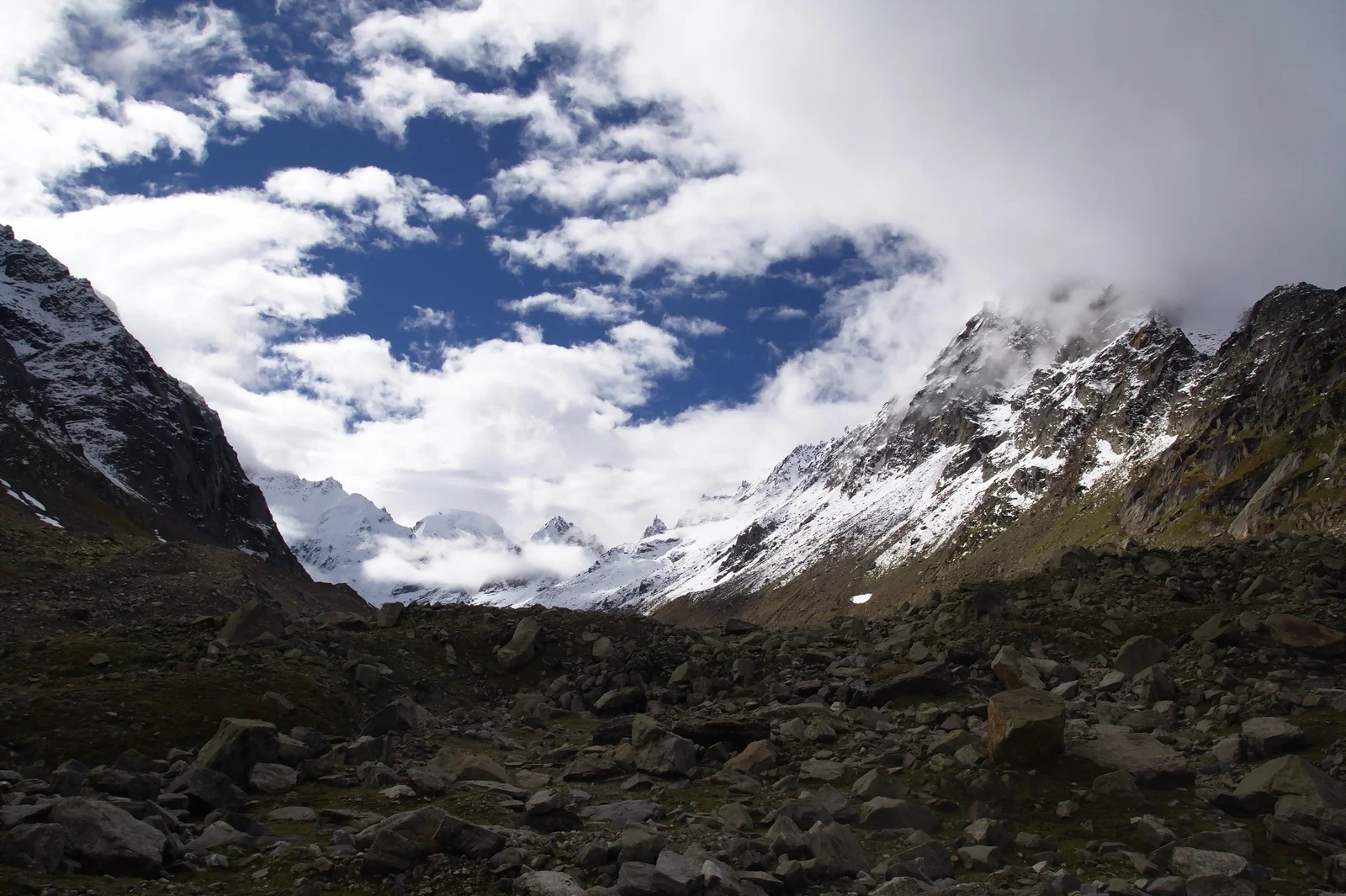
Hampta Pass crosses from the Kullu side into Lahaul through a high mountain corridor. The pass day is longer and more demanding than the approach.
Snow, weather and road access can change the plan. Keep a buffer and confirm the leader’s crossing and evacuation arrangements.
Trek overview
Use the route guide to understand the landscape, access and seasonal conditions. Distances and walking times are approximate.
Key features
Prepare for the terrain and weather rather than relying on a single difficulty label.
- Seasonal clothing and footwear
- Walking endurance for consecutive days
- Travel buffers for mountain roads
- A confirmed route and emergency plan
Before departure
Ask for a written list of the equipment, meals, accommodation and transfers covered by your booking.
Camping equipment
Confirm tent sharing, sleeping-bag temperature ratings and sleeping mats.
Trek leadership
Ask about local route knowledge, first-aid training and the group size.
Emergency arrangements
Check communication, evacuation routes and the emergency equipment carried.
Responsible camping
Use established camps, pack out litter and protect streams from waste.
Frequently asked questions
Compare the maximum altitude, walking hours, daily climbs and season. Short forest routes such as Nag Tibba can be a starting point, but even a weekend trek needs fitness and weather preparation.
Carry broken-in trekking shoes, a backpack, warm layers, a waterproof shell, sun protection, a headlamp, refillable water bottles and personal medicines. Confirm which camp equipment and snow gear are included before departure.
Build walking endurance gradually with regular walks, stairs and strength work. Practise on uneven ground with your daypack. Match your preparation to the longest day of the chosen itinerary.
Ask for dated availability, the final itinerary, group size, guide qualifications, inclusions, exclusions, transfer arrangements and cancellation terms in writing. A route guide does not guarantee an operating departure.
Yes. Snow, rain, road closures and permit restrictions can change camp locations, access and summit plans. Keep a travel buffer and accept the leader’s decision to turn back when conditions are unsuitable.
Stay on established paths, carry litter back, avoid campfires on alpine ground and keep soap and waste out of streams. Respect wildlife, grazing areas and local customs.